For more than six decades, Israel and Germany have cultivated one of the most stable, diverse, and strategically significant economic relationships in Europe. Today, the partnership extends across advanced industries, high-tech, manufacturing, clean energy, defense, healthcare innovation, and academic collaboration. As both economies undergo rapid transformation, the potential for deeper commercial ties is stronger than ever.
Germany is Israel’s leading trade partner within the European Union, and one of its most important partners globally. Israel, in turn, offers Germany world-class innovation, agility, and technological capabilities that complement the strengths of German industry. The combination of German engineering and Israeli innovation has become a powerful engine for joint economic activity.
Comparative Indicators Between the Countries | 2024
Although Israel and Germany differ significantly in size and scale, their economies share structural strengths that support cooperation in technology, industrial development, and innovation.

While Israel represents a smaller economy with a strong high tech orientation, Germany is the economic powerhouse of Europe and a global leader in industrial production. Together, they form a strong foundation for long-term trade and business cooperation.
Economic Environment
Germany, the world’s fourth largest economy, is entering a period of structural transition. Rising energy costs, global competition, an aging population and the need for digitization have placed pressure on traditional industries. However, these challenges are also driving unprecedented investment in innovation, sustainability, infrastructure, and technological modernization.
Key economic developments shaping Germany in 2024–2025
Germany continues to lead Europe in manufacturing, automotive engineering, scientific research and industrial automation. Despite a period of slower growth between 2023 and 2024, the medium-term outlook is stable, supported by government investment programs and a renewed focus on competitiveness.
Major shifts influencing the economic landscape include:
- A rapid transition toward renewable energy and diversified energy sources
- A shortage of hundreds of thousands of skilled workers, increasing demand for automation, AI, and HR technology
- A multi-year national investment plan in transport, energy infrastructure, digital transformation, and housing
- Accelerated adoption of Industry 4.0 technologies across factories and logistics centers
- Growing collaboration with global innovation hubs, including Israel
Germany’s political system provides regulatory certainty and long-term stability. Its role as Europe’s industrial and technological anchor ensures high relevance for Israeli companies seeking access to the EU market.
Photo: Courtesy of Depositphotos
SWOT Analysis of Germany’s Economic Trends for the Coming Years
Strengths
Germany’s economy remains one of the strongest and most resilient in the world. Its core advantages include:
- A highly advanced industrial base and leadership in machinery, automotive, automation, and chemicals
- A strong scientific and research ecosystem with internationally recognized universities and institutes
- High productivity and world-class engineering talent
- A stable political environment and predictable regulatory system
- Central positioning within the European single market and access to 450 million consumers
Weaknesses
Some structural challenges have become more pronounced in recent years:
- A rapidly aging population and an insufficient pipeline of skilled workers
- High dependence on imported energy and raw materials
- Slow administrative processes and heavy regulation that can delay innovation
- Increased production costs affecting traditional manufacturing sectors
Threats
Germany faces several external pressures that may influence economic performance:
- Strong competition from China in electric vehicles, semiconductors, and clean tech
- Uncertainty surrounding Europe’s energy security
- Supply chain disruptions caused by geopolitical tensions
- Political polarization in parts of Europe that may affect EU decision-making
Opportunities
Despite challenges, Germany is positioning itself for long-term transformation. New opportunities for cooperation include:
- Massive investment in green energy, hydrogen technologies, battery storage, and grid modernization
- The growing need for cybersecurity and AI solutions to protect critical infrastructure
- Digitization of healthcare, administration, and public services
- Demand for agricultural technologies that improve efficiency and sustainability
- Expansion of smart transportation, autonomous systems, and advanced mobility solutions
These opportunities align directly with Israel’s strengths in artificial intelligence, cyber defense, clean tech, water solutions, medical technology, and advanced sensors.
Photo: Courtesy of Depositphotos
Israel–Germany Trade and Business Relations
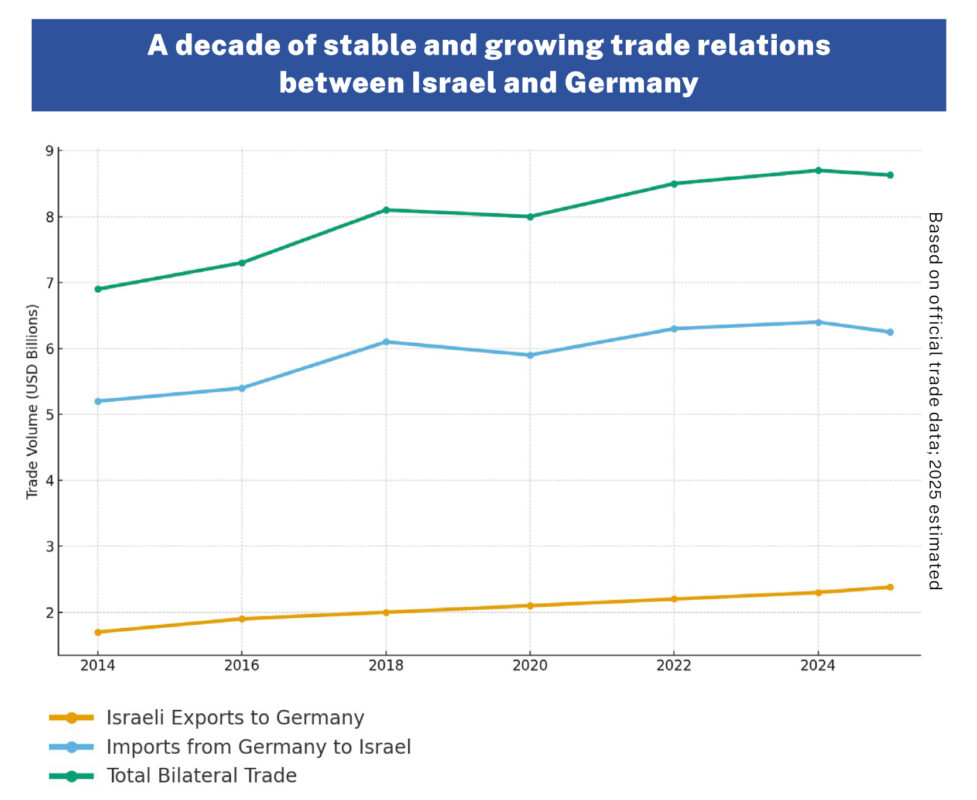
Israel and Germany have built a mature and multifaceted economic partnership. Over the past decade, bilateral trade has remained consistently strong, reflecting the alignment between German industrial demand and Israeli technological capabilities.
Trade figures for 2024–2025
- Israeli exports to Germany: ~ 2.2–2.3 billion USD
- German exports to Israel: ~5.5–6.4 billion USD
- Total bilateral trade: ~8.7 billion USD
Germany is Israel’s top trading partner in Europe and a critical gateway to the broader EU market. In return, Israel offers German companies access to one of the world’s most dynamic innovation ecosystems.
*Based on official trade data; 2025 estimated
Structure of bilateral trade
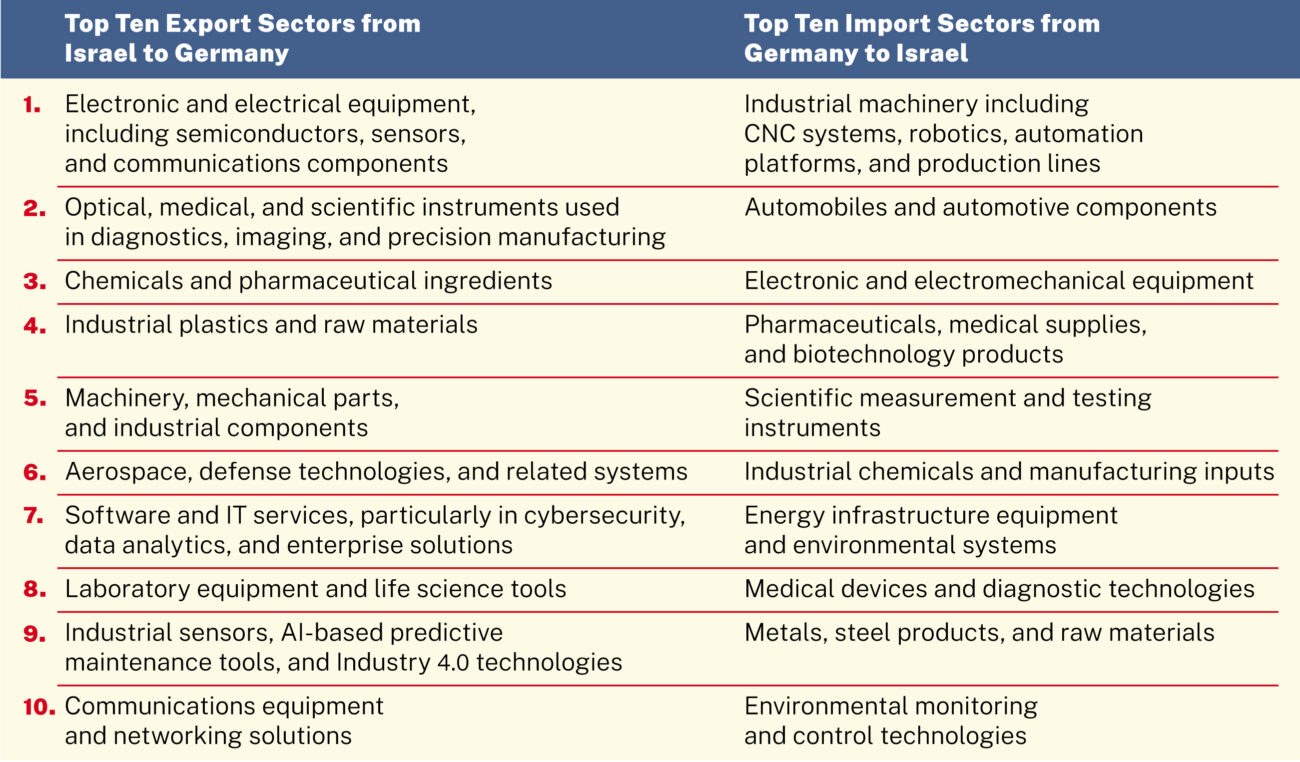
The majority of trade between the countries consists of industrial products and high-value technologies. Israeli exports focus on medical devices, optics, electronics, chemical materials, life science equipment, cybersecurity and specialized machinery. German exports to Israel include industrial machinery, vehicles, pharmaceutical products, electronics and advanced medical technologies.
The technological compatibility between Israeli capabilities and German needs has deepened cooperation, especially in fields requiring sophisticated engineering, real time data analysis and advanced automation.
Opportunities for Cooperation for Israeli Companies
As Germany undergoes rapid modernization, appetite for innovative solutions is growing. Israeli companies can play a critical role in enhancing industrial productivity, securing networks and infrastructure, supporting the energy transition, and digitizing complex systems.
Clean tech, energy, and infrastructure
Germany’s long-term transition to renewable energy creates significant demand for water technologies, grid management systems, cyber protection of utilities, energy efficiency tools, environmental monitoring and digital solutions for infrastructure planning.
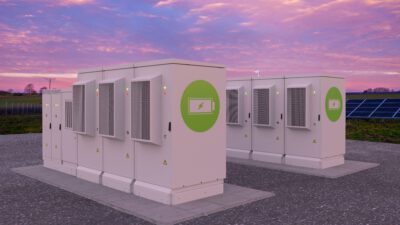
Photo: Courtesy of Depositphotos
Smart industry and Industry 4.0
Factories across Germany are introducing automation, robotics, AI-driven analytics, and smart logistics. Israeli startups and tech companies specializing in machine learning, predictive maintenance, manufacturing sensors, and optimization tools can find strong partners.
Cybersecurity and protection of critical infrastructure
Germany faces increasing cyber risks to health systems, transportation, energy networks, and public administration. Israeli companies are globally recognized leaders in cyber defense, operational technology security, and identity management.
Digital health and medical technology
Germany is significantly behind in healthcare digitization, opening opportunities for telemedicine platforms, AI-assisted diagnostics, advanced imaging technologies, clinical workflow systems, and hospital data management.
Smart mobility and automotive innovation
The shift to electric, connected, and autonomous vehicles aligns closely with Israeli expertise in sensors, safety algorithms, mapping technology, and fleet analytics.
Agriculture, water, and climate technology
Climate pressures and changing weather patterns increase demand for precision agriculture, irrigation technologies, fertilizer innovations, water recycling, and environmental monitoring. Israeli solutions match these needs with proven field performance.
Summary
The economic partnership between Israel and Germany is built on shared interests, complementary strengths, and a long history of collaboration. As global industries evolve, the synergies between the two countries are becoming even more relevant. Germany provides a large and advanced marketplace with stable institutions and a strong industrial infrastructure. Israel brings fast-paced innovation, deep technological expertise, and creative problem-solving.
Together, the two economies are positioned to expand cooperation in some of the most important sectors of the coming decade: energy transition, artificial intelligence, cybersecurity, digital health, Industry 4.0, clean tech, water management, and future mobility.
With global competition intensifying and technological transformation accelerating, the strategic value of the Israel–Germany partnership continues to grow.
Photo: Courtesy of Depositphotos