Alfred T. Mahan published his book, “The Influence of Sea Power upon History, 1660–1783“, back in 1890. He coined the terms Control of the Sea and Protection of Sea Lanes of Communication, which became cornerstones of modern naval strategy. At the time, the Strait of Hormuz had not yet become the type of maritime Choke Point he referred to as the key to achieving it. But now it fits remarkably well with his analysis. It also proves that the sea arena is just as important to global strategy as it ever was, and like the current war zone in the Middle East, sometimes even more than land and air. The question of whether the Strait of Hormuz will remain open transcends the intentions and direct interests of the warring parties. Eventually, it may decide the very outcome of the war. Sea power, much like Mahan argued, has always been, and will remain, a dominant factor in the global balance of powers.
Rethinking Naval Fleets: Surface Ships, Submarines, and the Challenge of Exposure
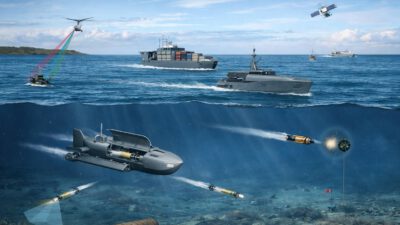
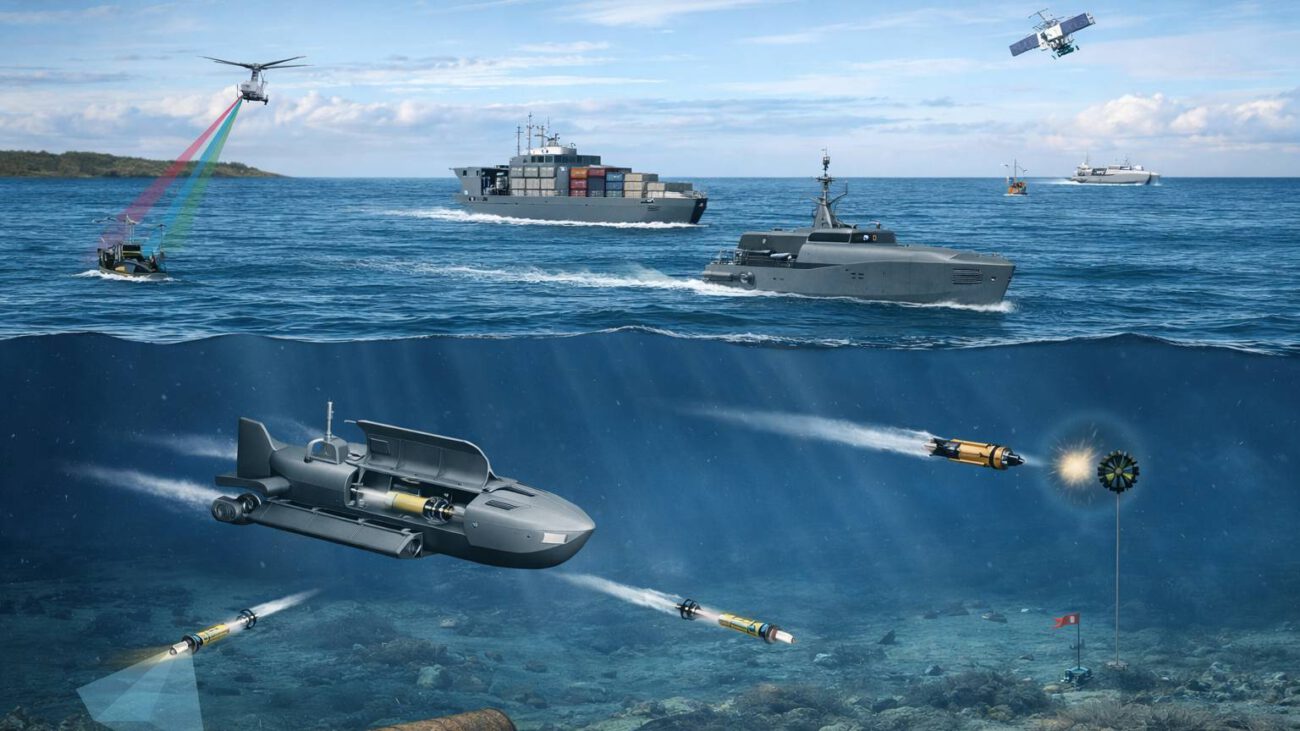
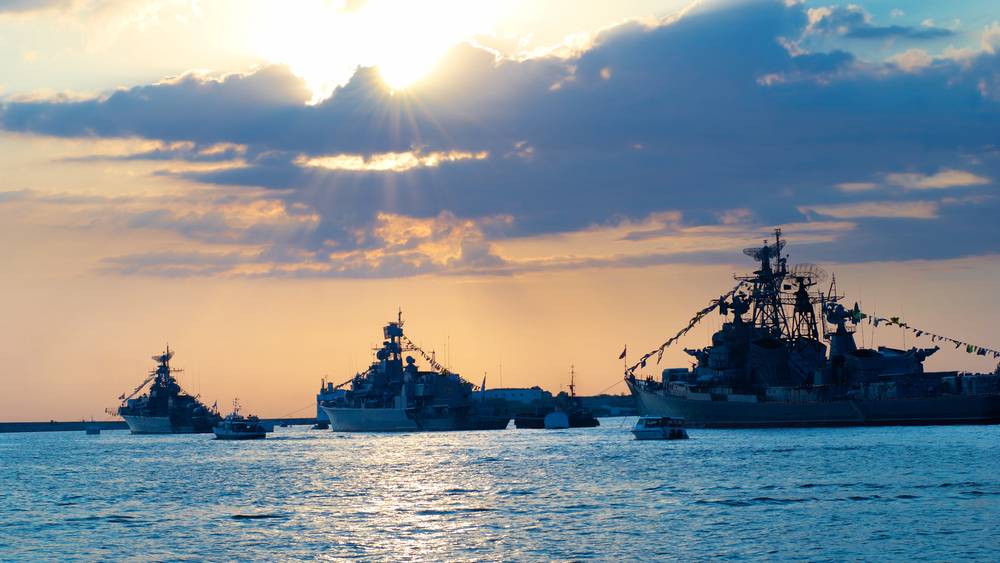
However, emerging threats and technologies are forcing major shifts in the very nature of the fleets and changing central shipbuilding axioms. Surface and subsurface, the fundamental conventions of modern navies, are reaching a point where their increasing exposure is becoming a problem. The range and variety of sensors, both in space and in the atmosphere, capable of precisely locating every surface vessel at any given time and position, forced ships to become “weapon islands,” loaded with defensive systems that do not always provide sufficient protective envelopes. Moreover, it made fighting ships drastically more expensive than they ever were. Hence, the new focus on unmanned surface solutions. The coming years will be dedicated to developing expandable unmanned vessels to buttress the firepower of the current fleets both offensively and defensively. They are much cheaper to build; losing them is casualty-free, and, number-wise, one can build dozens of them for the price of one Corvette.
As for the subsurface, a significant shift is also expected in the future, again due to increased exposure. Unlike the surface fleet, submarines have entirely given up relying on weaponry since the end of World War II, opting instead for stealth and maneuverability tactics. As acoustic technology with its limitations was the only wavelength by which they were prone to detection, they thrived under the sea with relatively few unmatched threats. Yet a 10,000-ton submarine, when propelled deep underwater, is creating a massive turbulence, leaving behind it an invisible wake. This phenomenon modulates the sea surface in a way that only electromagnetic emitters can pick up by special signal processing and significant computational power. Whether this is why strategic submarines are seeking shelter under the polar ice cap, I do not know, but these technologies have the prospect of making the ocean translucent. Since acoustic technologies have advanced too, submarines are consistently moving back into protective weapon envelopes, using underwater launched armament against air platforms carrying sonar and torpedoes. They will be much more proactive on the surface than their old hiding philosophy. In my view, the future of these two types of fighting vessels is bound to merge into a single bidimensional vessel, leveraging the advantages of both surface and subsurface operations.
The Rise of Unmanned Maritime Warfare and the Role of AI
The emergence of maritime unmanned combat platforms still lags behind the air, where drones, UAVs, and UASs have been crowding the skies for more than a decade. But it certainly comes into being, both above and below the surface. Here, as in the air, entrepreneurship was first initiated by small companies and start-ups whose ideas were good enough for first-generation prototypes. Now that the major players have taken over with industrial, large-scale, fully equipped products, it becomes clear that propagation limitations in underwater communications, energy capacity, and limited weapon options remain barriers for fully submerged unmanned solutions. Therefore, we will likely see surface/hybrid solutions equipped with guided munitions of various types as the primary maritime unmanned assets.
AI is a necessary condition for unmanned warfare in any fighting dimension, sea, land, or air. Yet AI does not mean autonomy. In an autonomous combat device, some or most parts of a given mission profile are performed automatically, without human intervention – but it can never become fully independent. Those parts of the mission profile can be instantiated to mitigate human error, but contrary to common myth, they cannot override human-written source code. It must also maintain constant communication right up to the very endgame to operate effectively. Like in the air, the challenge is to develop undetected, uninterrupted channels to communicate with the unmanned platform. In these areas, the ingenuity of software engineers and start-up entrepreneurs can be highly effective. AI-driven maritime systems are still in their infancy. This is where Israeli teams can make a difference, combining in-field combat experience with technology expertise.
Introducing: VADM (Ret.) Yedidia (Didi) Yaari

VADM (ret.) Didi Yaari
Age: 78
Family status: Married, father of three
Education: MPA, Harvard Kennedy School; BA in Middle Eastern History, University of Haifa
Military rank in the IDF: Vice Admiral (ret.), Commander in Chief of the Israeli Navy
Previous position: President & CEO of RAFAEL Advanced Defense Systems
Key achievement: During his tenure at RAFAEL, the company led the development and deployment of major defense systems such as Iron Dome, David’s Sling and the Trophy active protection system.
Background: Yaari began his military service in 1965 as an operator in the elite Naval Commando Unit (Shayetet 13).
Photo: courtesy of VADM (Ret.) Yedidia Yaari