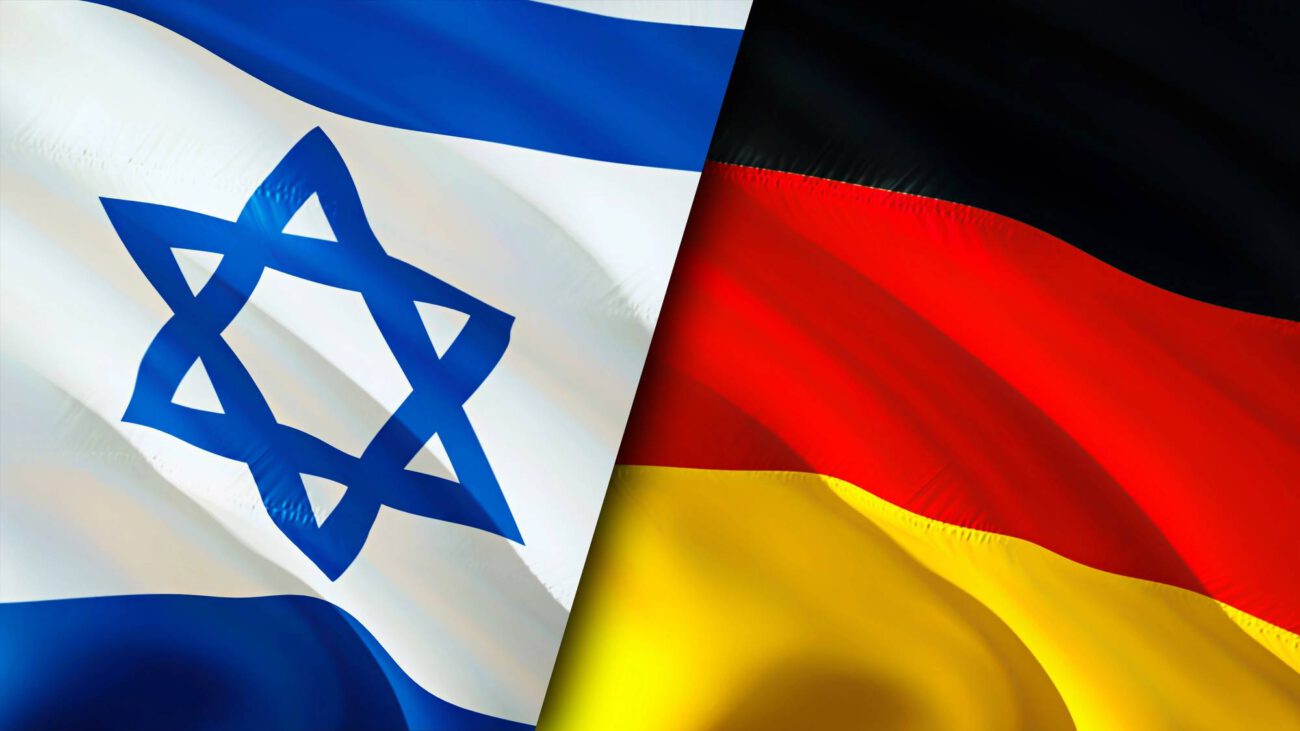

In 2025, Israel and Germany marked 60 years of diplomatic relations. Historically speaking, the economic aspect of the relationship between the two countries began to take shape much earlier, gradually and cautiously, based on the understanding that such a bond is not only political or historical, but also a practical infrastructure for cooperation, trust-building, and the promotion of long-term projects.
Over six decades of official relations, an extensive system of trade, investment, research and development, industrial ties, and technological cooperation has emerged. This system has positioned Germany as Israel’s principal economic partner in Europe, and Israel as an innovative and relevant partner for German industry in an era of digital, energy, and security transformation.
Economic foundations: from early agreements to formal relations
A key milestone in the economic relationship was the Reparations Agreement signed in Luxembourg in 1952 between Israel and the Federal Republic of Germany. The agreement included a commitment to supply goods and services on a significant scale over many years, and constituted an early economic pillar even before diplomatic relations were established. At the time, Israel was a young state in need of infrastructure, equipment, and broad economic support.
Diplomatic relations between the two countries were established in 1965. From that point onward, economic ties took on a broader, more consistent and institutionalized character, marked by growth in trade volumes, increased company presence, and the creation of official mediation mechanisms and business communities on both sides.
Institutions and mechanisms: building long-term business trust
A central factor in the success of economic relations between countries is the existence of effective “soft infrastructure:” institutions that connect companies, provide information, establish standards, and reduce barriers. In this context, the Israel-Germany Chamber of Commerce (AHK – Israel, German-Israeli Chamber of Industry & Commerce) serves as a representative body of the German economy in Israel and plays an active role in promoting trade relations, investments, and market penetration services.
In parallel, a governmental and scientific infrastructure for cooperation was developed, including frameworks for research collaboration, vocational training, and inter-ministerial programs. According to official reviews, cooperation in vocational training began as early as 1969, followed by the establishment of foundations for scientific and technological cooperation between government ministries in the early 1970s.
An additional milestone in strengthening business certainty was the signing of the Investment Protection Agreement in the mid-1970s, providing a legal framework for encouraging and safeguarding mutual investments.
Photo: Depositphotos
Science as diplomacy: research and development as a strategic anchor
One of the distinctive features of Israel–Germany relations is the central role of scientific and technological cooperation. Rather than emerging as a late addition, this cooperation helped build trust and, in some cases, preceded broader commercial expansion. Over time, it was reinforced through institutionalized joint funds and programs.
A prominent example is the German-Israeli Foundation for Scientific Research and Development (GIF), established in 1986 through an agreement between the science ministers of both countries. Since then, it has served as a key mechanism for financing collaborative research projects. Official German sources emphasize that technological cooperation is intended to promote economic and social prosperity in both countries, and that scientific ties have functioned as a long-term “bridge of trust.”
Within the broader European context, Germany is also regarded as Israel’s leading partner in European Union research programs in which Israel has participated since the mid-1990s, underscoring the continuity and depth of this research partnership.
Trade and investment: a central European partnership
Germany is one of Israel’s most important economic partners within the European Union. Bilateral trade is significant and stable, with annual economic relations estimated at more than €8 billion as of the end of 2025.
Beyond the numbers, the partnership reflects complementary strengths. For Israeli companies, Germany offers a large and sophisticated market, advanced manufacturing industries, a business culture that emphasizes quality, standards, and structured processes, and access to broader European markets. For German companies, Israel contributes rapid innovation capabilities, research-based solutions, and practical experience in deploying technologies in fields such as cybersecurity, smart industry, digital health, agritech, and climate tech.
Governments as economic actors: intergovernmental cooperation
In 2008, Israel and Germany launched their first intergovernmental consultations, creating a framework designed to deepen the unique relationship through coordinated initiatives, memoranda of understanding, and broad-based cooperation. Subsequent rounds over the following decade included joint declarations addressing civil, scientific, and technological collaboration.
In recent years, official cooperation has continued despite the emergence of a more complex regional and global environment. Notable examples include a cooperation agreement between Israel’s Ministry of Energy and Infrastructure and the relevant German federal ministry in November 2024, as well as an official update in December 2025 regarding strengthened cooperation in cybersecurity between Israel’s National Cyber Directorate and German government bodies. These developments reflect ongoing institutional collaboration in core strategic areas.
The potential for the next decade
The coming decade is expected to involve deep structural adjustments in the German economy. These include the transition to clean energy and smart electricity systems, the expansion of smart industry and digital supply chains, advanced automation, industrial cybersecurity, and the broad integration of artificial intelligence into manufacturing, logistics, and infrastructure management.
For Israel, this presents a clear opportunity not only to supply technology but also to contribute problem-solving approaches, rapid pilot programs, and collaborative models that connect between research institutions, startups, and industrial partners. At the same time, Germany offers Israeli companies the ability to transform innovation into stable, large-scale products, supported by engineering expertise, regulatory experience, established standards, and manufacturing capacity.
The combination of Israeli speed and flexibility with German precision, regulation, and scale represents a natural basis for high-value cooperation with both technological and commercial impact.
Conclusion: from legacy to focused opportunity
Six decades after the establishment of diplomatic relations, Israel and Germany maintain an economic partnership built on institutions, joint research frameworks, governmental mechanisms, business communities, and substantial trade flows. Official data indicate high and stable volumes, while the institutional architecture reflects depth and continuity.
Looking ahead, the central challenge is how to translate this strong foundation into focused initiatives: joint industrial projects, applied research collaborations, infrastructure pilots, and the positioning of Israeli innovation as a complementary and strategic component in the transformation of Germany’s core economic sectors.