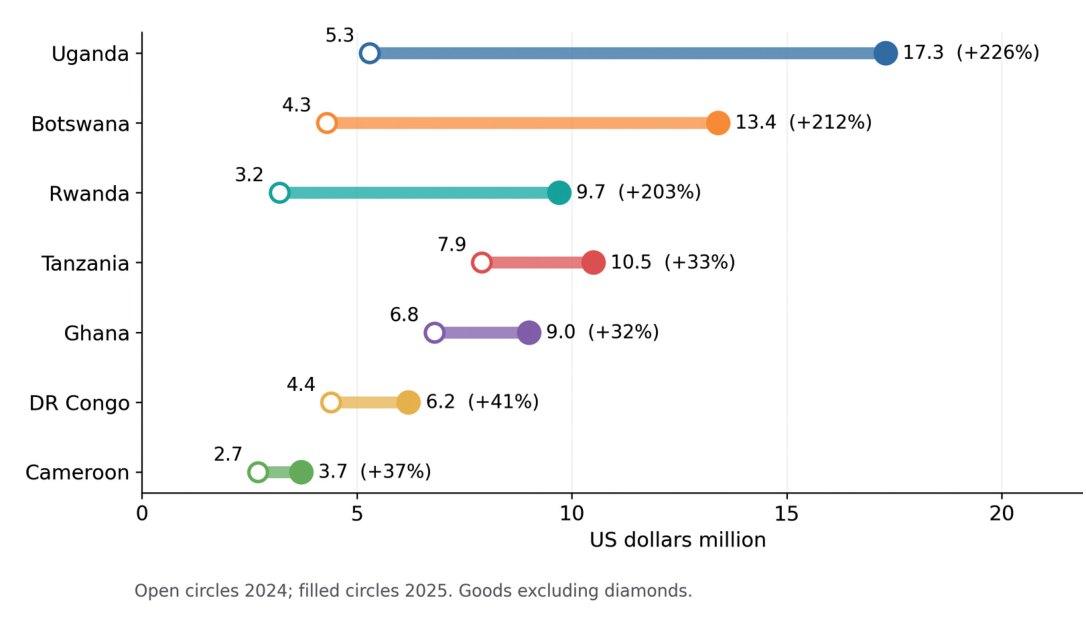
Israel’s trade with Africa moved in different directions in 2024 and 2025. Israeli exports to the continent declined overall, while imports increased. Yet several markets expanded, particularly Uganda, Botswana and Rwanda. The opening months of 2026 show that these differences persist, making individual countries and sectors more useful guides to business prospects than a single continental trend.
Africa in the global economy
Africa’s merchandise trade with the world reached approximately $1.5 trillion in 2025, growing by 6.1%. Trade between African countries increased by 5.5% to about $213.8 billion. Real GDP grew by approximately 4.5%, compared with 3.4% in 2024.
Many economies export oil, minerals and agricultural commodities while importing fuel, food, machinery and manufactured goods. Industrial centers add another dimension: vehicle and metals production in South Africa, fish processing and textiles in Mauritius, cocoa processing in Côte d’Ivoire, and automotive and electrical industries in Morocco.
This mix creates different requirements for equipment and industrial inputs. Financing and infrastructure remain important constraints, with Africa’s trade finance gap estimated at $74 billion in 2025. Payment terms, foreign currency availability and after-sales support can therefore matter as much as product suitability.
Israel and Africa
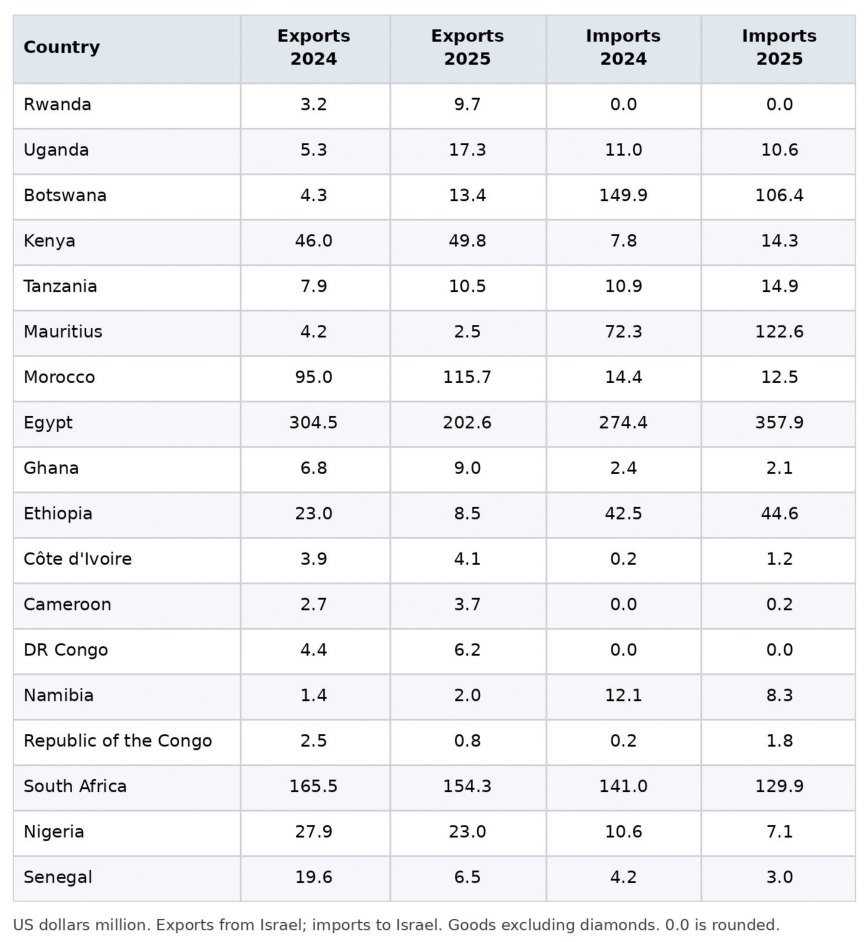
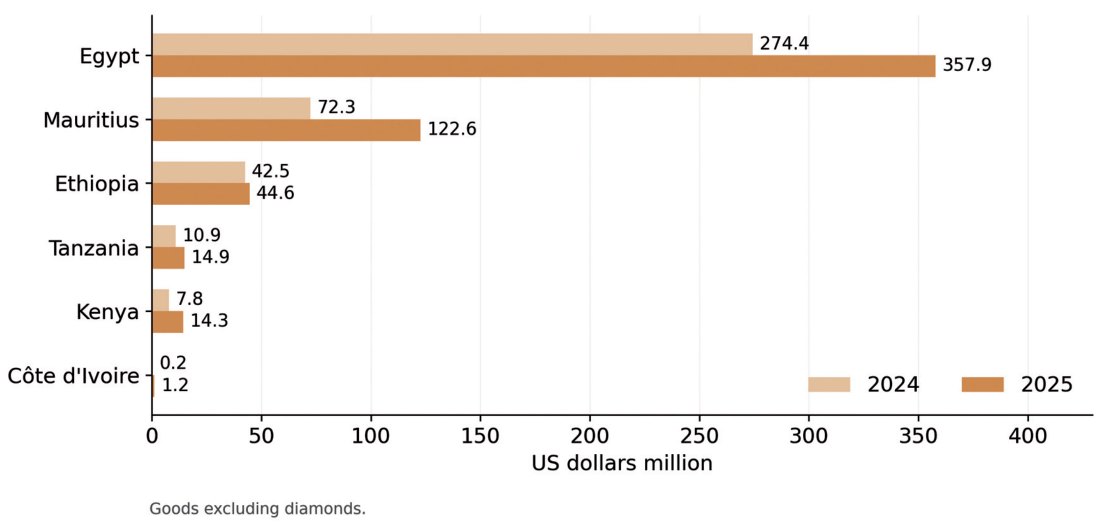
Growth was strongest in several smaller markets. Israeli exports to Uganda, Botswana and Rwanda more than tripled, while both exports and imports increased with Kenya and Tanzania. Imports from Egypt and Mauritius also rose substantially.
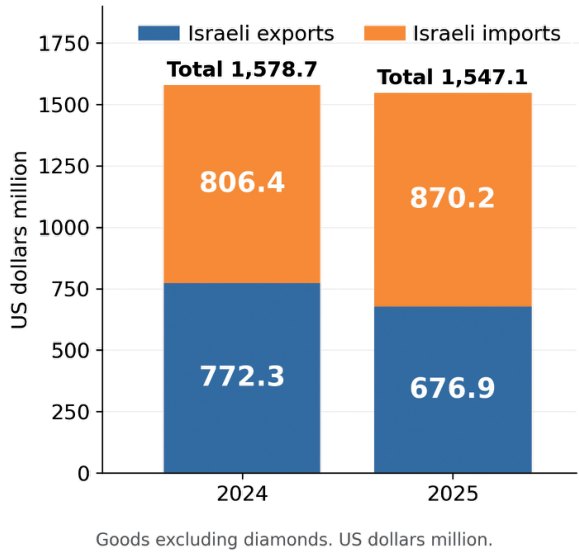
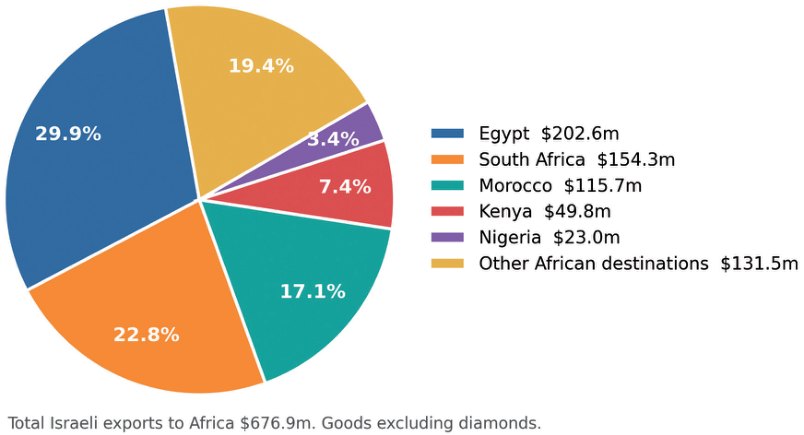
Across Africa, however, merchandise trade with Israel fell by about 2% to $1.55 billion in 2025. The increase in imports partly offset falling exports, widening Israel’s trade deficit. Egypt and Morocco together accounted for approximately 47% of Israeli exports to Africa.

Israel-Africa Merchandise Trade 2024 and 2025
Israeli Export Destinations in Africa 2025
Israel-Africa Trade by Country 2024 and 2025
East Africa with Rwanda in focus
Rwanda stood out with Israeli exports rising by approximately 203% in 2025. Israel opened its embassy in Kigali in April 2019, when exports to Rwanda amounted to $2.9 million. The 2025 figure was about 3.3 times that. Growth over this period was uneven, and the comparison does not establish that the embassy caused the increase.
Rwanda’s economy grew by 9.4% in 2025. Coffee export earnings approached $150 million, while tea and minerals remained important export activities. Imports include machinery, transport equipment, food, fuel and pharmaceuticals, creating areas for suppliers to examine alongside agricultural processing and infrastructure. Uganda combines agriculture and processing, with coffee playing a major role. Kenya’s tea, flowers and coffee industries connect farming with logistics and processing. Tanzania combines mining with commercial agriculture. Ethiopia recorded higher Israeli imports despite declining Israeli exports; its production base includes coffee, flowers, food processing, textiles and leather.
Growing Markets for Israeli Exports
West Africa
Ghana and Côte d’Ivoire recorded growth in Israeli exports. Ghana’s export economy centers on gold, oil and cocoa, while Côte d’Ivoire combines cocoa, rubber, cashews and gold with agricultural processing and refining. Their production bases support demand for inputs and processing equipment, although these sectors should not be assumed to dominate trade with Israel.
Nigeria and Senegal recorded declines in both directions. Nigeria combines oil and gas with agriculture, food processing and manufacturing, while continuing to import refined fuels and food. Senegal’s energy industry expanded alongside fishing, cement and chemicals; its joint gas project with Mauritania shipped its first LNG cargo in April 2025.
Smaller markets have distinct specialisations: cashews in Guinea-Bissau, bauxite and gold in Guinea, gold and cotton in Burkina Faso, phosphates and agriculture in Togo, cotton in Benin, rubber and mining in Liberia, and mining, agriculture and fishing in Sierra Leone.
Central and Southern Africa
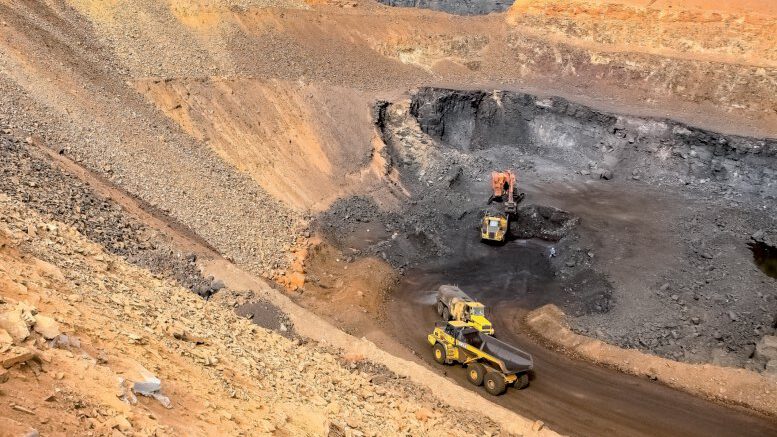
Mauritius recorded strong growth in Israeli imports, alongside a production base in textiles, fish processing and sugar. Botswana’s Israeli export purchases increased, while Israeli imports declined. Diamonds are central to Botswana’s economy but are excluded from the bilateral figures presented here.
Israeli exports also increased to Namibia, the Democratic Republic of the Congo and Cameroon. Their economic strengths range from mining and fishing in Namibia to copper and cobalt in the DRC, and energy, cocoa and timber in Cameroon. Imports from the Republic of the Congo increased despite lower Israeli exports.
South Africa remained a major partner, although both trade flows declined. Its vehicle, metals and mining industries distinguish it from more narrowly specialised economies. Zambia centers on copper mining and processing; Angola, Gabon and Mozambique rely heavily on energy and mineral resources.
Growing Sources of Israeli Imports
Other production centers include garments in Lesotho, sugar and beverage concentrates in Eswatini, minerals and tobacco in Zimbabwe, and mining, vanilla and garments in Madagascar. Seychelles and Cabo Verde combine fishing with fish processing; São Tomé and Príncipe grows cocoa. Malawi and Burundi have agricultural and processing activities, while Chad and South Sudan combine oil production with agriculture. The Gambia combines agriculture with tourism.
North Africa
Photos: Depositphotos
Morocco recorded higher Israeli exports. Its diversified local economy encompasses automotive and electrical industries, textiles and food processing. Egypt recorded higher Israeli imports but lower Israeli exports. Building materials, chemicals, fertilisers, food, engineering, and electronic products are important Egyptian exports to the world.
Early 2026
January and February brought growth in Israeli exports to South Africa, Ghana and Côte d’Ivoire, and in imports from Egypt and Botswana. Elsewhere, momentum weakened: Israeli exports to Rwanda fell from $6.1 million to $0.4 million compared with the same two months of 2025; exports to Kenya fell from $10.3 million to $5.2 million.
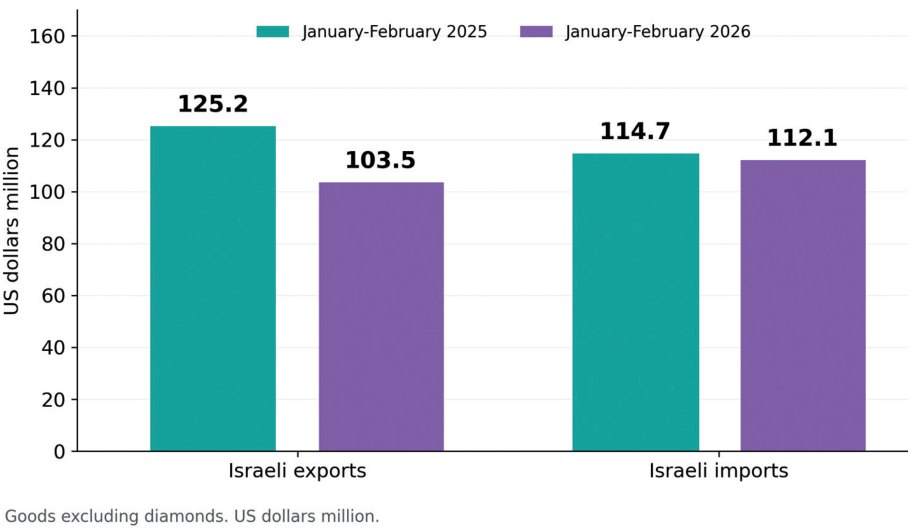
Across Africa, Israeli exports declined by 17.3% to $103.5 million and imports by 2.3% to $112.1 million. Combined trade reached $215.6 million, down 10.1%. Two months of activity cannot determine the full-year outcome.
Israel-Africa Trade in January and February
For Israeli businesses, the continent presents demand for agricultural equipment, food processing, industrial inputs, energy and infrastructure. Market size must be weighed against financing, local partners and service capacity. These goods figures exclude diamonds, services and investment. Imports are classified by country of purchase and exports by country of sale, which may differ from where goods are produced or ultimately consumed.