
By: Anat Messing
David Ben-Gurion viewed the defense industry as one of the means to close the numerical gap between the populations of the Arab states and the population of Israel. His vision came true, exceeding expectations. Israel’s technological skills were also prominently demonstrated in the 12-day war with Iran last June.
“Although I was confident about our technological capabilities, I was positively surprised by the level of performance, the overall integration, and the array of strikes carried out at a distance of 2,000 km from home, with precise synchronization in real time”, says Major General (res.) Prof. Isaac Ben-Israel, currently Head of the Yuval Ne’eman Workshop for Science, Technology and Security and Head of the Cyber Center at Tel Aviv University.
“Take, for example, the life-saving alerts of the Home Front Command on our mobile devices. Behind this action is a satellite array in space. Some are imaging satellites, and others are geostationary satellites, orbiting the Earth at the same speed at which the Earth rotates, thus remaining constantly over Iran. Such satellites can detect the launch of a ballistic missile at any given moment, often as early as the engine ignition stage, and transmit a direct message to the Home Front Command.”
Israel’s Multi-Layered Defense Doctrine
“The continuous actions of the Air Force at a distance of about 2,000 km from Israel astonished not only Iran but the whole world. We employed continuous territorial control, bridging between precision munitions and real-time intelligence, and striking a wide range of targets—from key figures, through air defense systems, to surface-to-surface missile sites. The goal was to create full freedom of action over Iran while damaging the enemy’s retaliatory capabilities,” explains Ben-Israel.
“In addition, the war provided a comprehensive testing ground for Israel’s defense industry and its countless offensive and defensive developments, on an unprecedented scale.”
Which technological systems took part in the war corresponding to each defense layer?
“The Arrow system dominated the topmost level of defense, developed by Israel Aerospace Industries as early as the mid-1980s. In the war, Arrow-2 intercepted ballistic missiles, while Arrow-3 intercepted them in space.
“The second line of defense was the David’s Sling system, which intercepts rockets, medium- to long-range missiles, and unmanned aircraft. This system was developed in cooperation between Rafael, Israel Aerospace Industries and the American company Raytheon.
“The Iron Dome system, which we all know well, constitutes part of the third layer. It is intended to intercept short-range rockets, mortar bombs, and unmanned aerial vehicles. It too was developed by Rafael in collaboration with other companies.
“In the next defense layer, aircraft and helicopters were used to intercept missiles and rockets that managed to penetrate the previous layers.”
What about the laser systems, which debuted in the past two years?
“Laser systems are designed to defend against rockets, missiles, and mortar bombs at short ranges, as well as against gliders, unmanned aerial vehicles, and drones. In the past two years, Israel experimented with prototypes of these systems, mainly against Hezbollah drones requiring swift response, and the trials proved highly successful.
“The key advantage of these laser systems lies in their game-changing cost-effectiveness. While each Iron Dome interception costs around $50,000, the cost of each interception by Rafael’s Iron Beam system amounts to just a few dollars. This technological achievement has a decisive effect on our defense concept.”
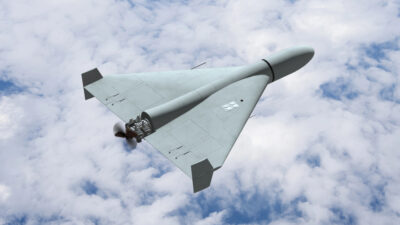
Military drone (Photo: Depositphotos)
And in the cyber arena?
“Today, the old EW (electronic warfare) array works in combination with the cyber array. Together, they provide another means to intercept UAVs and other threats—combining disruption through an electromagnetic beam (EW) and damaging the computer systems (cyber) of the enemy’s tools.
“One of the lessons learned from the war relates precisely to the cyber arena: we failed to disrupt the enemy’s influence operations on social networks, carried out by bots and fake news, despite knowing that the war over public consciousness has strategic importance.”
Dual Use of Defense Technology
Ben-Israel turns the spotlight on another trend that has developed over the years and is now changing, prompted by the last war.
“Since the establishment of the state, two development environments grew in Israel side by side: commercial-civilian and defense. Despite the dual-use potential inherent in many technologies developed in both environments, there was almost no cooperation between them.
“Last December, the Yuval Ne’eman Workshop held the first Defense-Tech conference, and despite the war, some 3,000 guests from around the world attended. Among them were investors from venture capital funds who understand that the time has come to invest in the defense industry, particularly in dual-use technologies such as cyber, artificial intelligence, and drones. These can be applied in wartime and peacetime alike, both in the defense-military and homeland security markets.”
Israel has always been a major exporter of defense systems, and the experience it has gained in recent years only added to its knowledge and capabilities. The proof is in the value of system exports, estimated at more than $15 billion per year and expected to grow further.
“Reality has proven that investment in developing defense technologies justifies itself,” concludes Ben-Israel. “The war with Iran restored the balance of power between Israel and the Iranian axis. Precisely against the background of our achievements, a new opportunity has emerged to form defense coalitions and expand the circles of agreements with our neighbors.”

Introducing: Professor Isaac Ben-Israel
- Age: 76
- Family status: Married, father of three
- Education: Professor (Emeritus) at Tel Aviv University
- Military rank in the IDF: Major General (res.)
- Current positions: Head of the Yuval Ne’eman Workshop for Science, Technology and Security; Head of the Cyber Center at Tel Aviv University
- Awards:
- Israel Defense Prize, 1972, for developing a bombing system for the Phantom aircraft
- Air Force Prize, 1976, for a computerized command-and-control system
- Military Intelligence Directorate Prize for Creative Thinking, 1984
- Israel Defense Prize, 2001, for a project representing an innovative concept of the future battlefield
- Additional fact: Served as a Member of Knesset in the 17th Knesset, representing the Kadima party