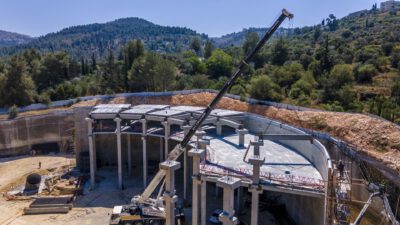

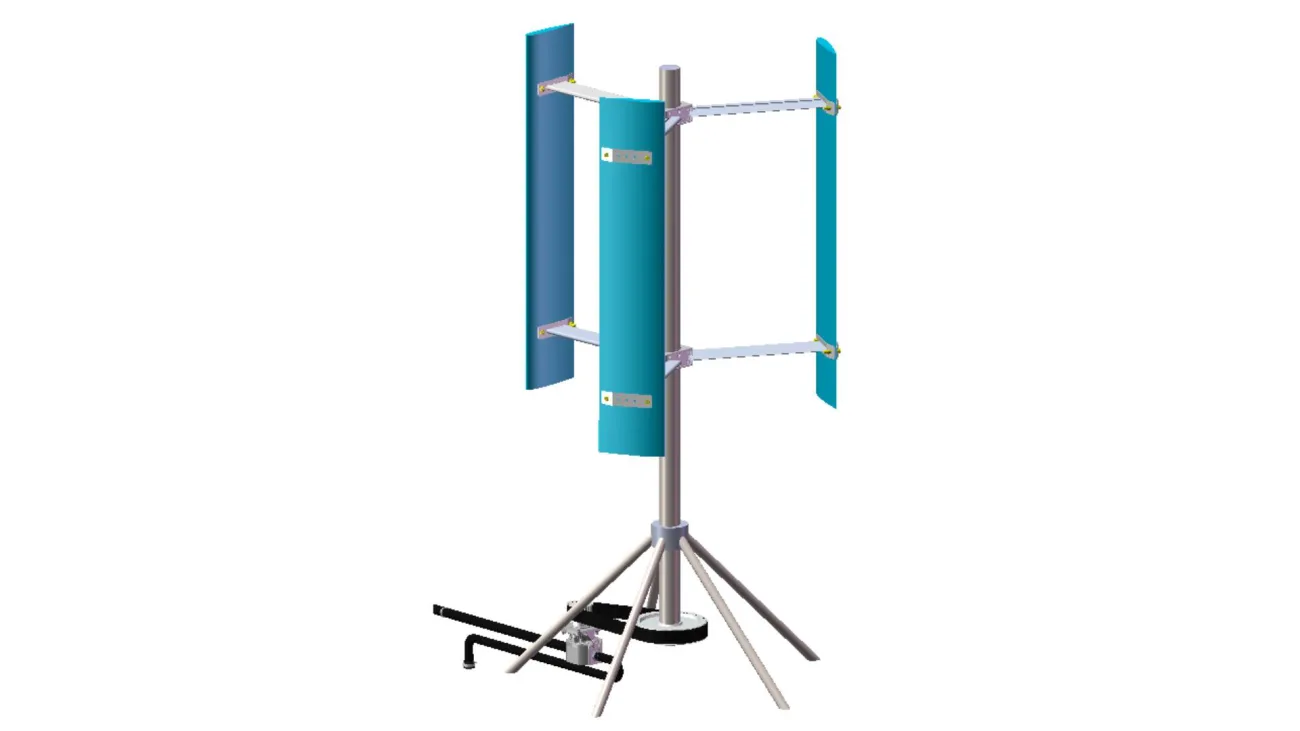
Technion development – water desalination using vertical wind turbines
“The climate time-bomb is ticking,” António Guterres, the U.N.’s Secretary General says. At the Technion, a wide range of activities and resources are directed towards improving sustainability across a spectrum of fields – stretching from energy and transportation, to agriculture, food, materials and many others. To more efficiently oversee and coordinate all of these diverse ventures, the Technion established a Sustainability Frontier: a central body tasked with coordinating and expanding the university’s numerous programs that help mitigate climate change.
In addition to the relevant research pursued at almost every Technion department, the Sustainability Frontier’s purview includes academic courses and other educational projects, as well as entrepreneurship and technology transfer, collaborations with both the public and private sectors, and more. It is headed by Prof. Avner Rothschild of the Department of Materials Science and Engineering.
Green Research
The scope of “green” research projects at the Technion campus is vast. Approximately 200 faculty members from many different fields, including chemistry, physics, biology, computer science, chemical engineering, materials engineering, food engineering, civil and environmental engineering, architecture and town planning, and more, are tackling the diverse challenges to our planet. They are working on converting solar energy into clean, storable hydrogen and electricity; designing biodegradable foams for packaging; utilizing microbiological additives to engineer “self-healing” concrete; applying Big Data analytics to optimize indoor energy consumption behaviors; generating electricity from seaweed; and innovating nanofiber catalysts for the conversion of CO2 into alternative fuel, to name just a few studies.
Technion development – water desalination using vertical wind turbines
Green Innovation
From scientific discoveries, to applied technologies. T3, the Technion’s technology transfer office, is an important link between academia and industry. Its task is to help budding entrepreneurs commercialize sustainable, high-impact inventions. Two of the Technion-born companies that have recently made the headlines are H2PRO – a green hydrogen start-up which uses innovative green energy technology developed by Prof. Avner Rothschild, Prof. Gideon Grader, and Dr. Hen Dotan, to produce hydrogen efficiently, inexpensively and safely; and Aleph Farms, a food-tech start-up dealing in cultured meat, which has recently managed to produce the world’s first cell-based ribeye steaks, relying on technology developed by Prof. Shulamit Levenberg.
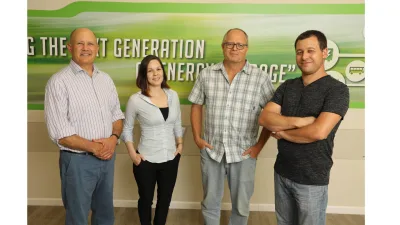
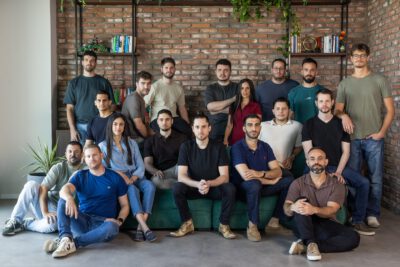
H2PRO: a new era of green hydrogen production. (L-R): Prof. Gideon Grader, Avigail Landman , Prof. Avner Rothschild and Dr. Hen Dotan – all from the Technion
Green Campus
The fight against climate change is not limited to the laboratories, but permeates every aspect of Technion campus life. Disposable utensils have been replaced by reusable ones, smart air conditioning regulates the temperature inside classrooms, and recently, the Technion is conducting a comprehensive survey aimed at assessing its total carbon footprint. The study analyzes not only electricity and water use, but also transportation, waste, and other areas that impact the environment.
Green Education
Among the many activities Technion students engage in to tackle climate change, one can name a recent climate-tech hackathon, focused on coping with extreme heat waves in urban areas. The event, organized by t-hub, the Technion Entrepreneurship and Innovation Center, in collaboration with the Technion Sustainability Center, the Social Hub, and the Technion Student Association, offered students a hands-on experience of understanding the specific challenge, and developing solutions. The winners, ‘SOLARit’ team, proposed a technology which enables the supply of electricity during power outages by using heat from water in solar water heaters. The team also represented the Technion at the international “Green Challenge” hackathon in Denmark.
Green Collaboration
Among the Technion’s many collaborations on climate-related topics, the most recent is with the Israel Innovation Institute’s PLANETech community. Researchers from different academic departments whose studies relate to FoodTech, water, energy and materials, are now meeting with entrepreneurs and investors interested in Climate Tech. The two groups will tackle the important, high-impact challenge of how to accelerate the translation of scientific breakthroughs into applications that will help fight the climate crisis.
For more information: https://sustainability.technion.ac.il/en/green-campus/