Onyx Security Raises $113 Million to Secure AI Agents
The Israeli cybersecurity company will use the Bessemer-led Series B round to expand its platform for securing autonomous AI agents
AI Agent. Photo: Depositphotos
Israeli cybersecurity company Onyx Security has raised $113 million in a Series B funding round led by US venture capital firm Bessemer Venture Partners. The round also included participation from Cyberstarts, TCV, Conviction, FirstMark, Vintage Investment Partners, QuantumLight and G Squared.
The new investment brings the company’s total funding to $153 million. According to media reports, the round was completed at an estimated valuation of approximately $640 million, representing a several-fold increase compared with the company’s previous funding round.
Onyx Security operates in one of the fastest-growing areas of cybersecurity: AI agent security. Unlike chatbots, which primarily provide users with information and answers, AI agents can independently perform actions such as accessing corporate systems, transferring information, changing permissions, writing code and initiating business processes.
This autonomy creates new risks. An AI agent does not have to be targeted by a cyberattack to cause damage. It may misinterpret a task, send sensitive information to the wrong destination, alter system settings or carry out an irreversible action, all at a speed that makes timely human intervention difficult.
Onyx’s platform serves as a security and control layer between AI agents and the systems to which they are connected. It enables organizations to identify the agents operating within their environments, define which actions they are authorized to perform and monitor their activity in real time.
When the platform detects a potentially dangerous action, it can approve or block it, refer it for human review, or redirect the AI agent toward a safer way of completing the task. In this way, Onyx aims to help organizations expand their use of artificial intelligence without sacrificing control, security or corporate governance.
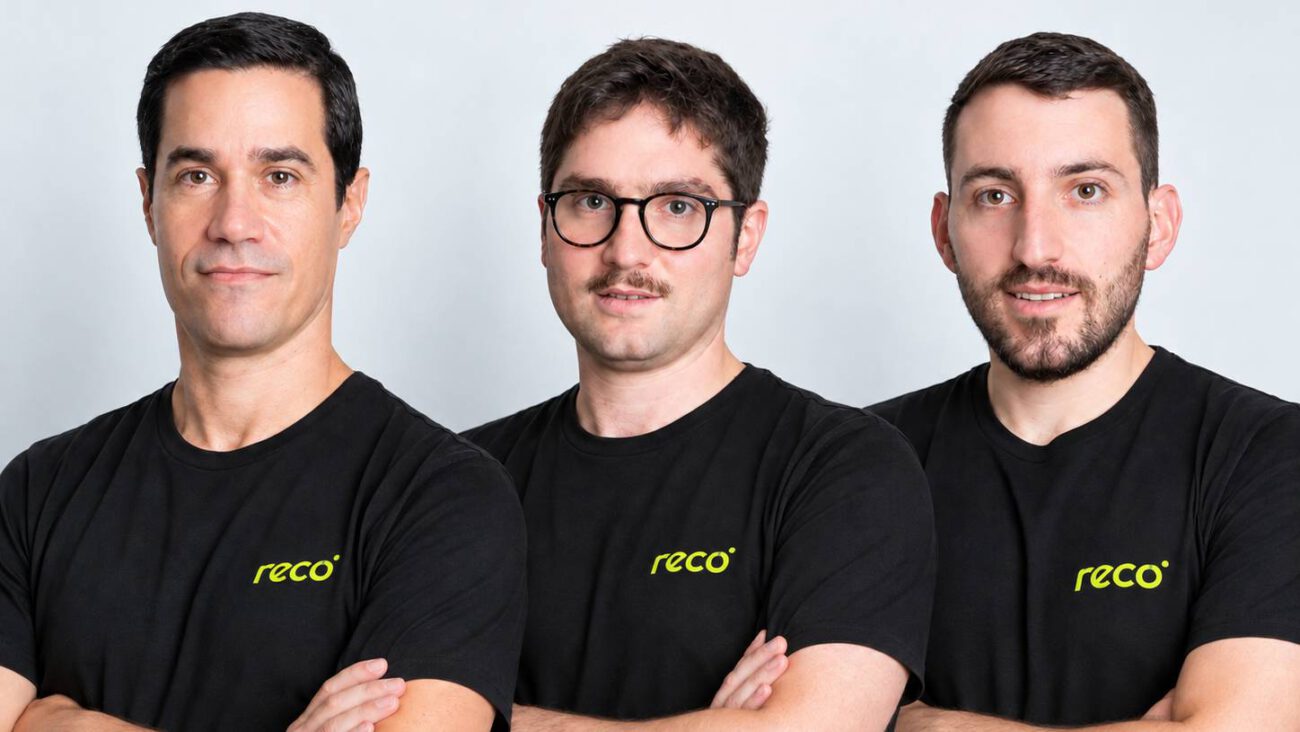
Onyx was founded in 2024 by CEO Maxim Bar-Kogan, a veteran of the Israeli military’s Unit 8200 and former vice president of product and engineering at Mixtiles, and Gil Elbaz, the company’s chief AI officer. Elbaz served in the Israeli Air Force’s Operational Technology Unit, co-founded synthetic data company Datagen and later worked as an AI architect in the office of Nvidia’s chief technology officer.
The company currently employs more than 80 people in Israel, the United States and Canada, and operates from offices in Tel Aviv and New York. According to Onyx, its customers already include several Fortune 500 companies, and its business has grown fourfold since it emerged from stealth mode approximately four months ago.
In June, Anthropic announced that it had integrated Onyx’s technology into solutions designed to help organizations use artificial intelligence securely. The partnership gives the Israeli company a significant foothold in the enterprise market at a time when the adoption of AI agents is accelerating rapidly.
Onyx plans to use the new funding to train the next generation of its models, accelerate its product roadmap and expand its sales, business development and marketing operations in the United States and other international markets.
As AI models become more capable and agents undertake increasingly consequential actions, Bar-Kogan said, organizations need tools that can understand these systems’ intentions, follow their decision-making processes and intervene in real time to guide them toward safe outcomes.
Israel's trade with Africa moved in different directions in 2024 and 2025: exports declined overall, imports rose, and markets such as Rwanda, Uganda and Kenya showed strong growth potential.
Africa's need to increase food production, adapt to extreme climate conditions and improve water management meets Israeli experience developed under conditions of scarcity.
Africa has become a global laboratory for mobile financial services, now moving beyond basic payments towards credit, insurance, cross-border trade and fraud prevention.
Senior officials of Israel's Ministry of Foreign Affairs and Israel's ambassadors across Africa welcome the Israel-Africa Business Guide 2026/27 and outline opportunities for trade, investment and partnership.
From telecom software and cybersecurity to digital learning, partnerships are opening new possibilities for African businesses, institutions and technology professionals.
Clear expectations, shared investment and room to learn together can help Israeli and African companies turn a promising introduction into a lasting relationship.
Through agricultural training, water expertise, medical cooperation and humanitarian assistance, MASHAV works with African partners to strengthen local skills and support lasting development.
By combining Israeli solar and water technologies with African expertise and community participation, Innovation: Africa has delivered more than 1,400 sustainable projects.
Autonomous irrigation, local partnerships and sustainable urban livelihoods: how SoliDrip helps turn rooftops and courtyards in African cities into productive farms.
WE Africa connects global expertise and technology with opportunities across Africa in nine sectors, from agriculture and water to energy, health and logistics.
OpenAI has acquired Glass Imaging, a company developing artificial intelligence technology to improve image quality in smartphones and compact cameras.
Join our newsletter for updates on a wide range of Israeli technologies and companies across different sectors.
Stay informed and discover potential business opportunities.