Israeli-Founded Reco Raises $55 Million to Secure Enterprise AI Agents
The funding, which includes a strategic investment from AT&T Ventures, will support the cybersecurity company’s global expansion as businesses deploy growing numbers of autonomous AI agents
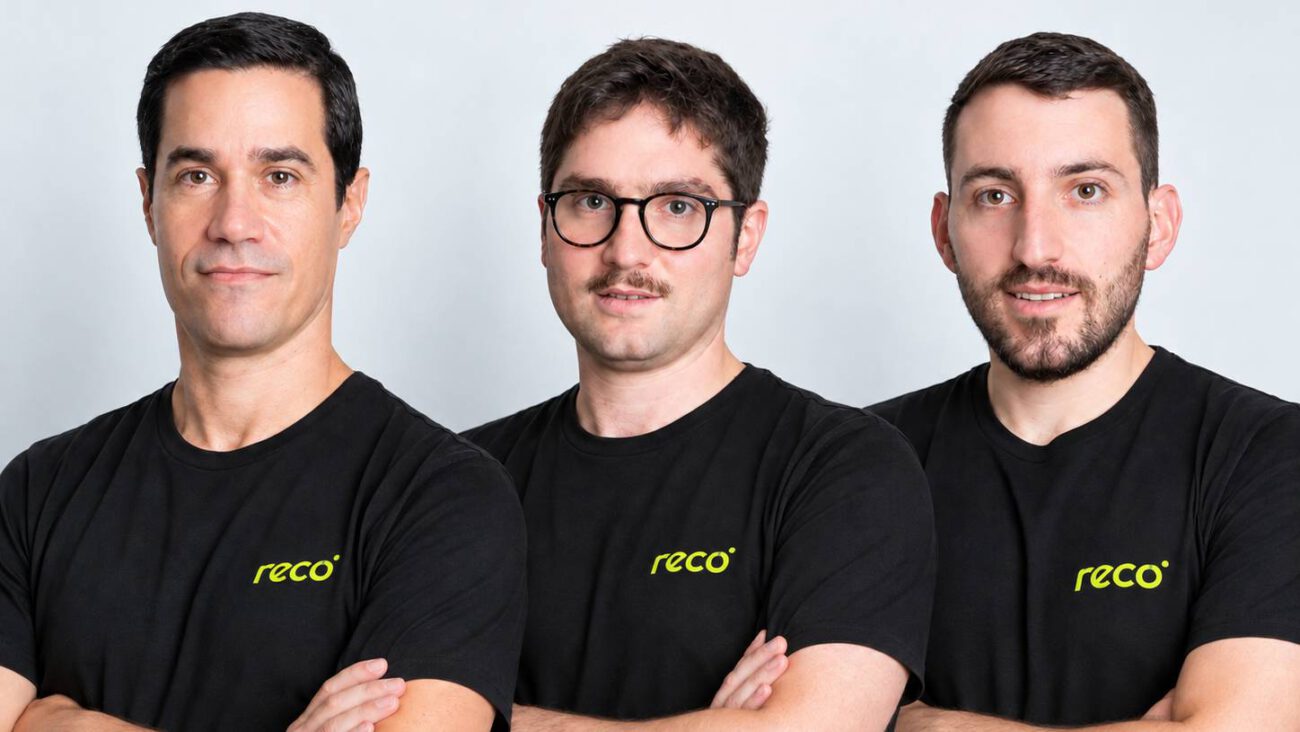
Reco founders: (from left to right): Ofer Klein, Gal Nakash and Tal Shapira. Photo by Recolabs Inc
Israeli-founded cybersecurity company Reco has raised an additional $55 million, including a strategic investment from AT&T Ventures and backing from new investors Forestay and Quadrille Capital.
The investment brings Reco’s total funding to $140 million. It follows a $30 million Series B round announced earlier in 2026 and will be used to expand the company’s sales, partnerships, distribution channels and customer support operations.
Reco develops a security platform designed to help large organizations discover, monitor and govern AI agents, AI tools and software-as-a-service applications across their business environments.
As companies increasingly use autonomous agents to carry out tasks, access corporate applications and interact with sensitive information, security teams need to understand which agents are operating, what data they can reach and which permissions they hold.
Reco’s platform maps the connections between applications, identities, permissions and workflows. This allows organizations to identify unauthorized or poorly governed agents, detect potentially risky behavior and enforce security controls without preventing employees from adopting new AI tools.
AT&T is both an investor in Reco and a customer of the company. Its participation provides strategic validation from a major international telecommunications group deploying AI across a large and complex organization.
“As both an investor and customer, AT&T recognizes the growing importance of helping organizations understand and manage how AI agents interact with business applications and data,” said Vikram Taneja, head of AT&T Ventures.
Reco was founded in 2020 by Israeli entrepreneurs Ofer Klein, Gal Nakash and Tal Shapira. The company operates in both Israel and the United States, with its corporate headquarters in Florida.
The company originally focused on securing the growing number of cloud applications used inside organizations. It has since expanded its technology to address the rapid adoption of generative AI, copilots and autonomous agents that can act independently across multiple business systems.
This shift is creating what the industry describes as “agent sprawl.” Unlike conventional software users, AI agents may operate continuously, connect to numerous applications and perform actions without direct human supervision. These capabilities can improve productivity, but they also introduce new risks involving access privileges, sensitive information and accountability.
Reco says demand for its technology is increasing among Fortune 500 companies as AI agents become embedded in applications, collaboration platforms, browsers and automated business processes.
The new investment reflects growing international interest in technologies that secure the enterprise adoption of artificial intelligence. For Reco, it also provides additional resources to strengthen its commercial presence and partnerships as organizations move from experimenting with AI agents to deploying them at scale.
Israel's trade with Africa moved in different directions in 2024 and 2025: exports declined overall, imports rose, and markets such as Rwanda, Uganda and Kenya showed strong growth potential.
Africa's need to increase food production, adapt to extreme climate conditions and improve water management meets Israeli experience developed under conditions of scarcity.
Africa has become a global laboratory for mobile financial services, now moving beyond basic payments towards credit, insurance, cross-border trade and fraud prevention.
Senior officials of Israel's Ministry of Foreign Affairs and Israel's ambassadors across Africa welcome the Israel-Africa Business Guide 2026/27 and outline opportunities for trade, investment and partnership.
From telecom software and cybersecurity to digital learning, partnerships are opening new possibilities for African businesses, institutions and technology professionals.
Clear expectations, shared investment and room to learn together can help Israeli and African companies turn a promising introduction into a lasting relationship.
Through agricultural training, water expertise, medical cooperation and humanitarian assistance, MASHAV works with African partners to strengthen local skills and support lasting development.
By combining Israeli solar and water technologies with African expertise and community participation, Innovation: Africa has delivered more than 1,400 sustainable projects.
Autonomous irrigation, local partnerships and sustainable urban livelihoods: how SoliDrip helps turn rooftops and courtyards in African cities into productive farms.
WE Africa connects global expertise and technology with opportunities across Africa in nine sectors, from agriculture and water to energy, health and logistics.
OpenAI has acquired Glass Imaging, a company developing artificial intelligence technology to improve image quality in smartphones and compact cameras.
Join our newsletter for updates on a wide range of Israeli technologies and companies across different sectors.
Stay informed and discover potential business opportunities.